Digital construction planning linked with integrated logistics processes.
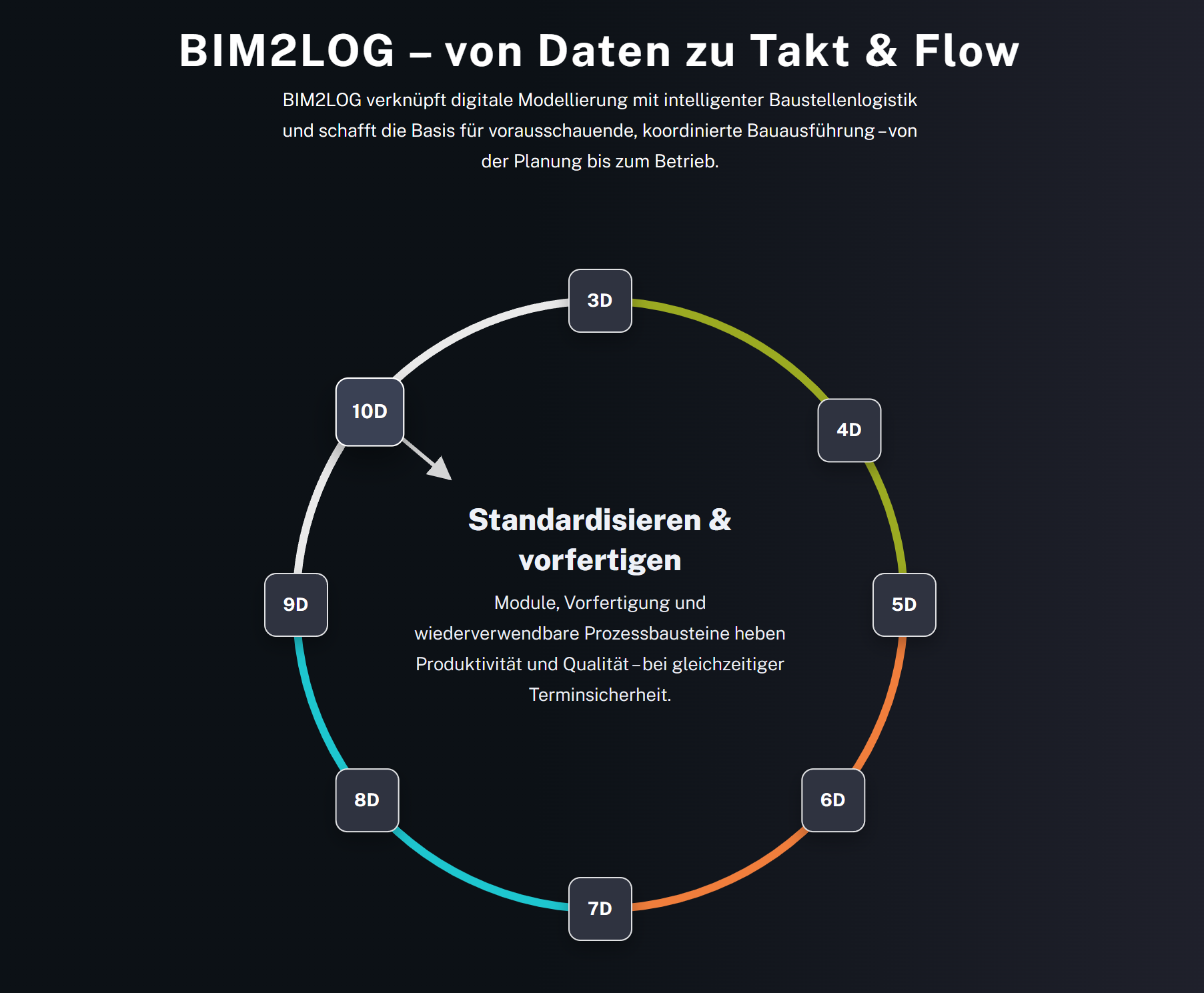
BIM2LOG stands for Building Information Modelling to Logistics and is a polydimensional logistics management system that links digital construction planning with integrated logistics processes. It is a digital, model-based logistics solution that makes construction sites more efficient, faster, and more cost-effective.
By linking BIM planning, real-time data (IoT), and automated logistics control, BIM2LOG enables perfectly coordinated construction execution – the right quantity, at the right time, in the right place: just-in-time, transparent, and economical.
BIM2LOG is our planning method that enriches, optimizes, and automates information (from the construction project, the schedule, and the BIM model) logistically.
The attributes of the BIM model are enriched with logistical data, allowing material flows, storage areas, and transport routes to be optimally planned. Already in the planning phase, it is considered when, where, and in what order materials must be delivered and installed.
In addition to geometric building modeling, standardized attributes (nomenclatures) allow the schedule to be linked with the model and automated to not only visualize but also simulate construction processes. This allows for early identification of bottlenecks, so that countermeasures can be taken in a timely manner.
The quantities from the model calculate space utilization on the construction site on a daily basis. This allows control to be carried out according to the just-in-time principle – from virtual consolidations to physical bundling of deliveries. A central delivery strategy prevents material congestion and ensures that processes remain smooth even with high complexity.
The pull principle, which calls up material based on demand calculated from the model's masses per unit of time, replaces the classic push principle. Vertical logistics components such as cranes, hoists, and internal transport routes are directly integrated and coordinated in the digital planning.
BIM LEAN LOG connects Building Information Modeling, Lean Construction, and Site Logistics into an efficient, transparent, and cost-saving system.
Creation of digital 3D models. Comprehensive information: geometry, materials, costs, sustainability, operational data, etc.
Precise planning and optimization of workflows. Structured schedules and takt plans for resource allocation and bottleneck avoidance.
On-time material supply, even under difficult conditions. Use of modern software tools and agile methods on the construction site.